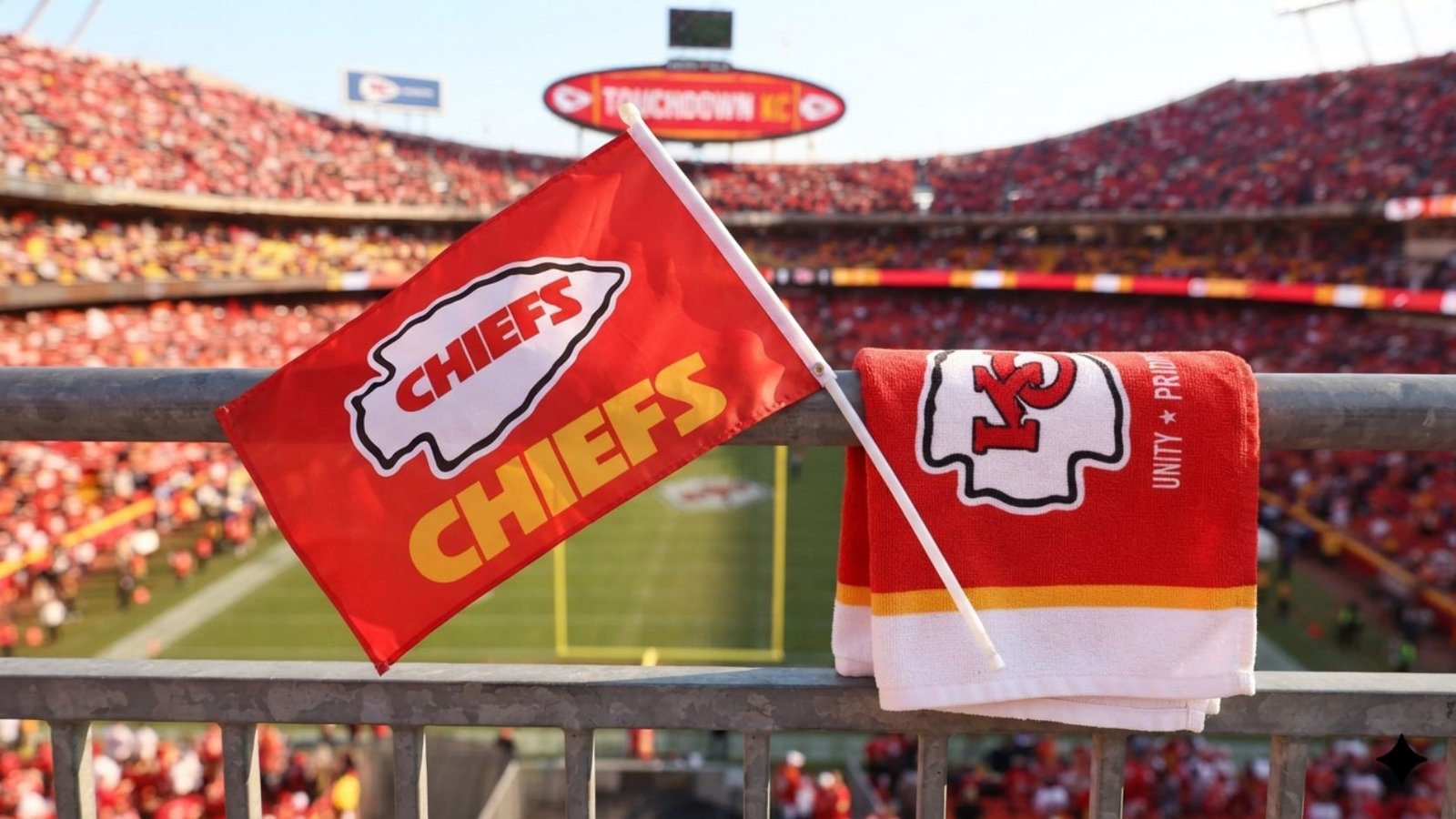
Custom sports flags are designed to be seen from a distance. They appear in stadium stands, fan zones, opening ceremonies, parades, school events, sponsor activations, and broadcast shots. When the color is wrong, the logo is blurry, or the fabric edge is poorly finished, the problem is easy to notice.
That is why quality control is especially important for sublimation printing flags.
Digital sublimation printing is one of the most popular methods for custom sports flags because it can produce bright colors, smooth gradients, detailed graphics, and lightweight fabric products. But a good final result depends on more than the printer. Artwork, fabric, ink, heat transfer, cutting, sewing, packing, and inspection all affect the final quality.
This checklist explains what buyers, teams, sponsors, and event agencies should confirm before and during production of custom sports flags.
Why Sublimation Printing Is Used for Sports Flags
Sublimation printing is a heat-transfer process that turns dye into gas and bonds it with polyester fibers. Instead of sitting only on the fabric surface, the color becomes part of the fabric.
For custom sports flags, this method offers several advantages:
- Bright colors for stadium visibility
- Lightweight fabric that waves easily
- Good detail for logos, patterns, and event graphics
- Smooth full-color printing
- Suitable for small and large production runs
- Good durability for normal event use
Sublimation printing works best on polyester fabric. This is why many rally flags, hand flags, fan flags, team flags, and promotional sports flags are made with polyester materials.
QC Starts Before Printing: Artwork Review
Many flag quality problems begin before production starts. If the artwork is low resolution, the logo is too small, or the color reference is unclear, even a good printer cannot produce a perfect result.
Before production, confirm:
- Final artwork file is approved
- Logo files are vector format when possible
- Text is converted to outlines
- Artwork size matches the flag size
- Bleed area is included
- Print direction is correct
- Single-sided or double-sided printing is confirmed
- Pantone colors or brand color references are provided
- Sponsor logos are correctly placed
- No spelling, date, or event-name errors
For custom sports flags, simple artwork usually performs better than crowded artwork. A bold logo, strong team colors, and clear contrast are easier to recognize in a stadium crowd.
Fabric QC Checklist
The fabric controls how the flag waves, how the color appears, and how the finished product feels in the hand.
Before mass production, check:
- Fabric type is confirmed, such as polyester pongee, knitted polyester, or satin polyester
- Fabric weight matches the approved sample
- Fabric surface is clean and smooth
- Fabric has no stains, holes, oil marks, or weaving defects
- Fabric is suitable for sublimation printing
- Fabric shrinkage is controlled before cutting
- Fabric color base is consistent, usually white for bright sublimation printing
For stadium hand flags and rally flags, lightweight polyester is often preferred because it moves easily when fans wave it. For premium flags or display flags, a heavier fabric may create a better perceived value.
Printing QC Checklist
Digital sublimation printing flags should be checked during printing, not only after all pieces are finished.
Inspect these points:
- Print color matches approved proof or color reference
- Team colors are consistent across batches
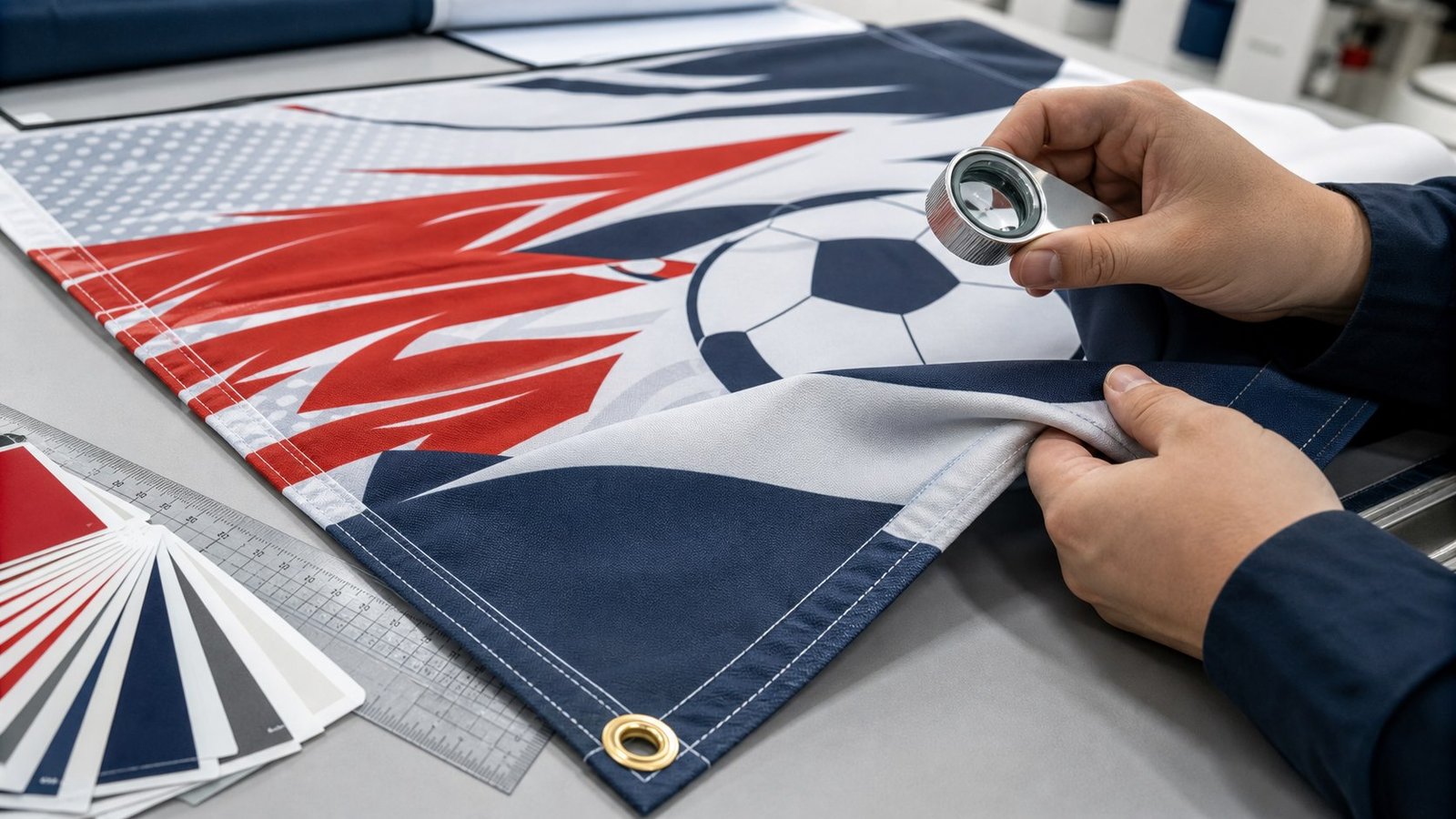
- Logo edges are sharp
- Fine lines are not broken
- Gradients are smooth
- No color banding
- No ink stains or transfer marks
- No ghosting or double image
- No white spots or missing print areas
- Print position is aligned with the cutting line
- Front and back print direction is correct for double-sided flags
Color control is one of the most important steps. Sports teams and sponsors often have strict brand colors. A red that looks too orange or a navy that looks too purple can weaken the professional impression of the event.
Heat Transfer QC Checklist
In sublimation printing, heat, pressure, and time must be controlled carefully. If these settings are wrong, the final print may look faded, uneven, or blurred.
During heat transfer, check:
- Temperature setting is stable
- Pressing time is consistent
- Pressure is even across the fabric
- Transfer paper is aligned correctly
- Fabric does not shift during pressing
- No scorch marks
- No faded areas
- No wrinkles pressed into the fabric
- No paper marks or transfer residue
For large sports flag orders, production should include in-line checks at regular intervals. This helps catch color or alignment issues before too many pieces are affected.
Cutting and Size QC Checklist
A sports flag may look simple, but incorrect cutting can create visible quality problems. Uneven edges, wrong sizes, or poor alignment can make the product look cheap.
Check these details:
- Finished flag size matches order specification
- Cutting line is straight
- Corners are clean
- Shape matches approved artwork
- Bleed area is removed correctly
- No important logo or text is cut off
- Size tolerance is within agreed standard
- Pieces from different batches are consistent
If the flags will be placed on seats, packed into fan kits, or attached to sticks by machine, size consistency becomes even more important.
Sewing and Edge Finishing QC Checklist
Edge finishing affects both appearance and durability. For custom sports flags, the correct finish depends on the product type and use case.
Common finishing options include:
- Heat-cut edge
- Single-stitched edge
- Double-stitched edge
- Pole sleeve
- Header tape
- Grommets
- Plastic stick attachment
Inspect these points:
- Stitching is straight and secure
- Thread color matches the approved sample
- No loose threads
- No skipped stitches
- No puckering around the edge
- Pole sleeve width is correct
- Stick attachment is firm
- Grommets are positioned correctly if required
- Flag can wave naturally after finishing
For handheld rally flags, the connection between the flag and stick is especially important. If the sleeve is too tight, assembly becomes slow. If it is too loose, the flag may slide during use.
Double-Sided Flag QC Checklist
Double-sided custom sports flags need extra attention because both sides must align correctly.
Check:
- Front and back artwork orientation is correct
- No mirrored text unless intentionally designed
- Two sides are aligned properly
- Middle blockout layer, if used, is flat and even
- Edges are sewn cleanly without shifting
- Final flag is not too heavy for waving
For large stadium giveaways, single-sided printing may be enough if the flag is mainly viewed from one direction. For premium sponsor events, double-sided printing can improve visibility and perceived quality.
Assembly QC Checklist for Hand Flags
Many custom sports flags are delivered with plastic sticks. Assembly quality affects fan safety, distribution speed, and user experience.
Before packing, confirm:
- Stick length matches specification
- Stick color is correct
- Stick is straight and clean
- Stick ends are smooth
- Flag sleeve fits the stick
- Flag does not fall off easily
- No sharp edges
- No broken or cracked sticks
- Finished hand flag is easy to wave
For children, school events, or family sports days, safety requirements should be reviewed carefully.
Packing QC Checklist
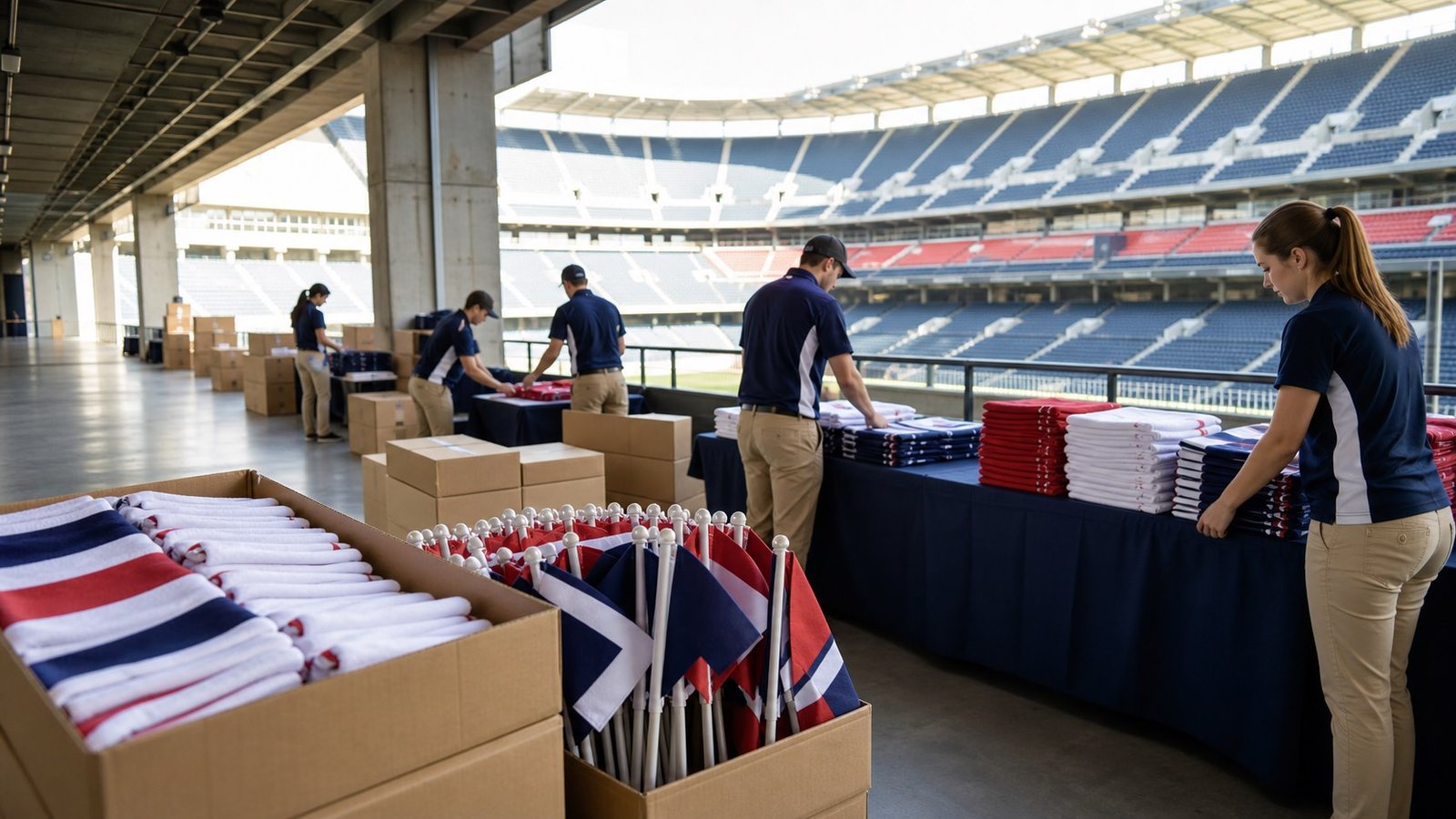
Packing is often overlooked, but it matters for stadium events. A good packing plan helps gate teams distribute items quickly and reduces damage during shipping.
Check:
- Quantity per polybag is correct
- Quantity per carton is correct
- Carton size and weight are manageable
- Carton marks match the event or distribution plan
- Products are folded consistently
- Flags are not heavily creased
- Sticks are packed safely
- Moisture protection is used when needed
- Cartons are strong enough for shipping
- Final carton count is accurate
If flags will be distributed at multiple stadium entrances, ask the supplier to pack by gate, section, or fixed quantity per carton. This can save time on event day.
Final Inspection Before Shipment
Before shipment, a final random inspection should confirm that the order matches the approved sample and purchase details.
Final inspection should include:
- Product type
- Material
- Finished size
- Print color
- Logo placement
- Edge finishing
- Assembly
- Quantity
- Packing method
- Carton marks
- Shipping documents
For large custom sports flag orders, photos or videos from production and final inspection can help buyers confirm quality before goods leave the factory.
Common Defects in Sublimation Printing Flags
Here are common issues buyers should watch for:
- Color difference from approved sample
- Blurry logo edges
- Ghosting caused by fabric movement
- White spots from poor transfer contact
- Uneven color caused by heat or pressure variation
- Crooked cutting
- Loose stitching
- Wrong print direction
- Incorrect stick size
- Poor carton packing
Most of these issues can be reduced with clear artwork, approved samples, in-line inspection, and a supplier experienced in sublimation printing flags.
Questions to Ask Your Flag Supplier
Before placing an order, ask your supplier:
- What polyester fabric do you recommend for this flag size?
- Can you match our team or sponsor colors?
- What is the production lead time?
- Can you provide a digital proof or pre-production sample?
- What is your size tolerance?
- How do you inspect color during production?
- How are flags packed for stadium distribution?
- Can you support urgent sports event deadlines?
- Can you provide inspection photos before shipping?
The answers will show whether the supplier understands both printing quality and event logistics.
A Practical QC Checklist for Buyers
Use this simple checklist before approving production:
- Artwork approved
- Flag size confirmed
- Fabric confirmed
- Printing method confirmed
- Color reference confirmed
- Single-sided or double-sided option confirmed
- Edge finishing confirmed
- Stick or accessories confirmed
- Packing method confirmed
- Delivery date confirmed
- Shipping address confirmed
- Inspection standard confirmed
Clear information helps prevent delays, rework, and quality disputes.
Build Trust With Better Quality Control
Custom sports flags are more than simple fabric products. They represent a team, a sponsor, an event, and a fan experience. Good sublimation printing can make the crowd look energetic and professional. Poor quality can damage the impression before the game even begins.
J&F produces custom sports promotional products for teams, sponsors, event agencies, and stadium campaigns, including rally flags, hand flags, banners, towels, scarves, caps, bags, and fan gift boxes.
If you are planning a custom sports flag order, send us your event date, quantity, flag size, artwork, delivery address, and target budget. Our team can recommend the right material, printing method, finishing option, and quality control plan for your project.