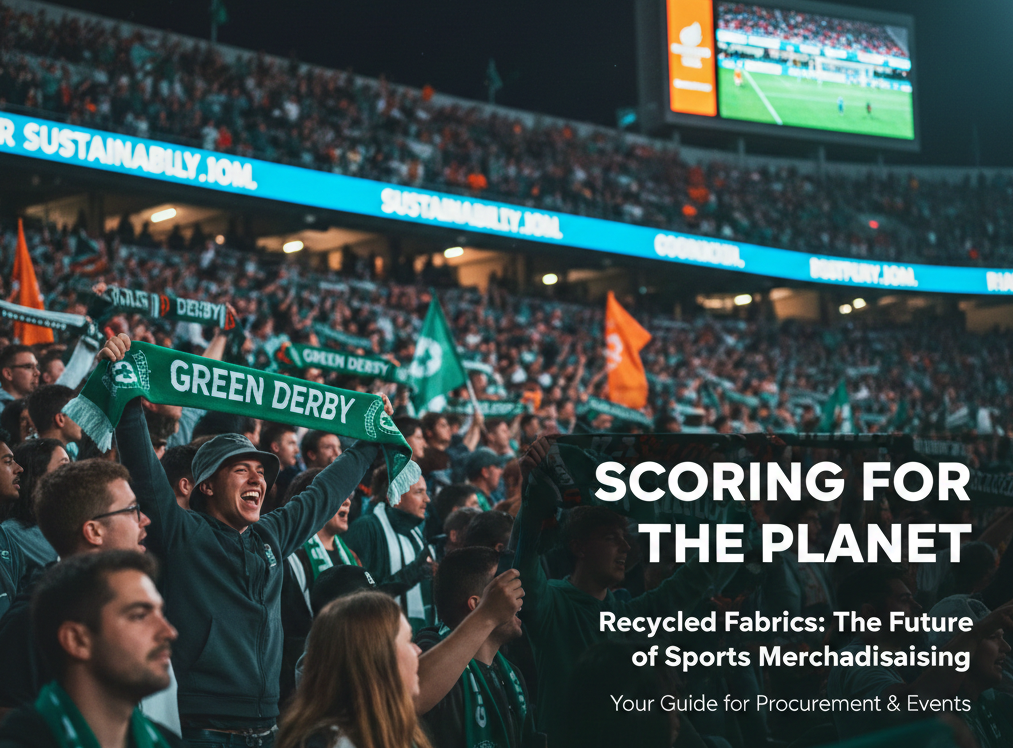
In the high-energy world of sports marketing, the “swag” we produce—the vibrant scarves waved in the stands, the bucket hats worn by fans in the summer heat, and the massive flags draped across stadium tiers—serves as the heartbeat of fan engagement.
However, for modern procurement officers and event planners, the priority is shifting. It’s no longer just about the visual impact; it’s about the environmental footprint. As global sports brands and corporate sponsors commit to “Net Zero” targets, the demand for sustainable promotional products has moved from a “nice-to-have” to a non-negotiable requirement.
This guide explores the world of recycled fabrics in sports promo, the certifications you need to know, and how making the switch can elevate your brand’s reputation.
1. The Material Revolution: From Plastic Bottles to Fan Gear
Most traditional sports merchandise is made from virgin polyester. While durable and excellent for vibrant sublimation printing, virgin polyester is a petroleum-based product.
What is rPET?
The star of the show in sustainable merch is rPET (Recycled Polyethylene Terephthalate). This material is created by breaking down post-consumer plastic waste—primarily water bottles—and spinning them into new polyester fibers.
- Scarves: Recycled acrylic and rPET blends can mimic the soft, “knitted” feel of traditional football scarves while reducing energy consumption by up to 50%.
- Bucket Hats: Durable rPET canvas provides the same structure and UV protection as virgin materials but keeps plastic out of our oceans.
- Flags & Banners: Large-scale displays often require massive amounts of fabric. Using recycled polyester ensures these high-visibility items tell a story of sustainability.
2. Navigating the “Alphabet Soup” of Certifications
In a market prone to “greenwashing,” procurement professionals need ironclad proof of sustainability. If you are sourcing for a major event, these are the four certifications you must look for:
GRS (Global Recycled Standard)
The GRS is the gold standard. It doesn’t just verify that the fabric is recycled; it tracks the material through the entire supply chain.
- What it guarantees: At least 20% recycled content (though 50%+ is standard for high-quality goods), social and environmental processing requirements, and chemical restrictions.
OEKO-TEX® Standard 100
While GRS focuses on the origin of the fiber, OEKO-TEX focuses on safety.
- Why it matters: It certifies that every component of the product (the fabric, the thread, and even the dyes used for your team’s logo) is free from harmful substances. For wearable items like hats and scarves, this is a vital trust signal.
RCS (Recycled Claim Standard)
Similar to GRS but focused primarily on the “chain of custody.” If a product has an RCS label, you have a documented trail proving the raw material actually came from a recycled source.
Sedex / BSCI
These aren’t fabric certifications, but social compliance audits. For an event planner, knowing that the factory producing your 50,000 flags treats its workers fairly is just as important as the fabric itself.
3. Case Study: The “Green Derby” Success Story
To understand the impact of these materials, let’s look at a hypothetical (yet realistic) application for a major European Football Club.
The Client: A top-tier club hosting a “Sustainability Round” match.
The Challenge: They needed 20,000 custom scarves and 5,000 bucket hats for a fan giveaway, but their corporate social responsibility (CSR) policy forbade the use of virgin plastics.
The Solution:
- Product: We produced “Ocean-Bound” rPET scarves. Each scarf repurposed approximately 8-10 plastic bottles.
- Traceability: Every item was shipped with a GRS certificate copy, allowing the club to market the exact number of bottles diverted from landfills.
- The Result: The campaign generated massive PR buzz. Fans didn’t just see a scarf; they saw a badge of environmental commitment. The club reported a 30% increase in positive social media sentiment regarding their merchandise compared to the previous year.
4. Performance vs. Sustainability: Do You Have to Sacrifice Quality?
A common misconception among procurement officers is that recycled fabric feels “cheaper” or doesn’t hold color as well. This is a myth.
| Feature | Virgin Polyester | Recycled Polyester (rPET) |
| Durability | High | High |
| Color Vibrancy | Excellent | Excellent (Sublimation ready) |
| Texture | Smooth/Soft | Indistinguishable from virgin |
| Carbon Footprint | High | Low (approx. 75% less CO2) |
Modern rPET fibers are chemically identical to virgin polyester. Your team’s crest will be just as sharp, and the colors will be just as “on-brand” as they have always been.
5. A Checklist for Procurement & Event Planners
If you are currently planning a promotional campaign or a stadium event, use this checklist to ensure your “green” merch is actually green:
- Ask for the Scope Certificate (SC): Ensure the manufacturer holds a valid GRS or RCS certificate.
- Verify the Dyeing Process: Ensure the factory uses eco-friendly inks (OEKO-TEX certified) to prevent water pollution during the printing of flags and scarves.
- Consider Packaging: There is no point in an eco-friendly scarf if it arrives wrapped in a non-recyclable single-use plastic bag. Request biodegradable or bulk packaging.
- Calculate the Impact: Ask your supplier for the “Bottle Count.” Being able to tell your board, “We recycled 100,000 bottles for this event,” is a powerful metric for your annual report.
Conclusion: Making the Move
The sports industry has a unique power to influence culture. When a fan puts on a recycled bucket hat or raises a recycled flag, they aren’t just supporting a team; they are participating in a circular economy.
For the procurement professional, choosing recycled materials is the ultimate “win-win.” You satisfy the demand for high-quality, durable promotional gear while future-proofing your brand against environmental regulations and consumer backlash.
The question isn’t whether you should switch to recycled fabrics—it’s whether you can afford to wait.