Introduction: Why Cotton Still Rules the Stadium
In the world of sports promotion, while synthetic “dry-fit” fabrics are popular for performance, cotton remains the gold standard for fan comfort and brand longevity. Whether it’s a high-density screen-printed scarf for a Premier League match or a soft-touch promotional tee for a marathon, the way you print on cotton determines whether the item becomes a fan’s favorite keepsake or a one-time-use throwaway.
1. Understanding the Canvas: Why Cotton is Unique
Before diving into inks and machines, a B2B buyer must understand the substrate. Cotton is a natural fiber with high absorbency, which makes it ideal for “wet” printing processes but challenging for heat-based transfers compared to polyester.
- Ring-Spun vs. Combed Cotton: For high-detail printing, always opt for combed cotton. The removal of short fibers creates a smoother surface, preventing “fibrillation” (where fibers poke through the ink).
- The Weight Factor (GSM): Promotional flags usually require lighter cotton (120-140 GSM) for wind-flow, while premium hoodies for team shops require 300+ GSM.
2. Core Printing Technologies for Sports Merchandising
A. Screen Printing (The B2B Powerhouse)
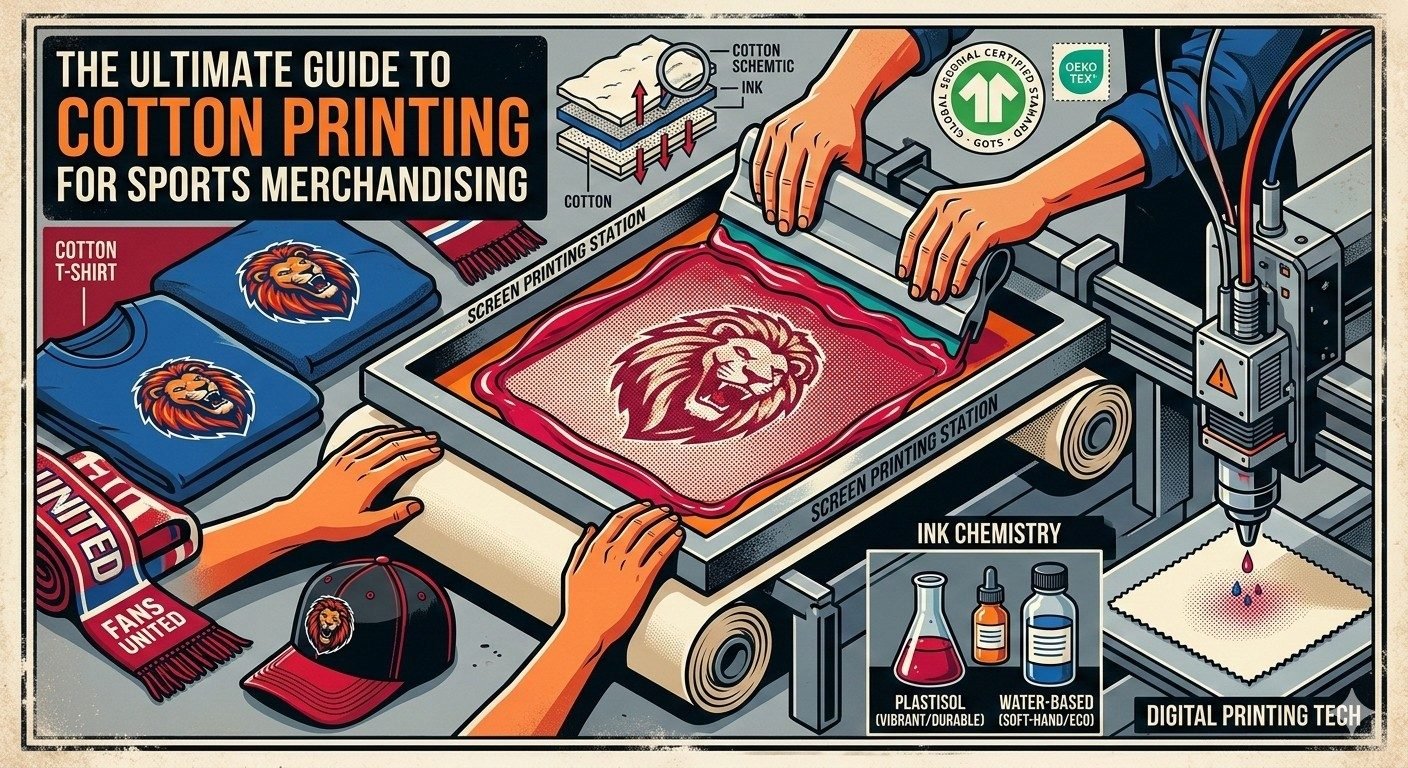
For bulk orders of flags, scarves, and t-shirts, screen printing is the most cost-effective and durable method.
- The Process: Involves creating a mesh stencil (screen) for each color.
- Pros: Incredible color vibrancy (Pantone matching), high durability (withstands 50+ washes), and low unit cost for high volumes.
- Cons: High setup costs for multi-color designs; not ideal for small “one-off” events.
B. Direct-to-Garment (DTG)
Think of this as a giant inkjet printer for clothes. It’s perfect for complex, photographic designs on cotton hats or shirts.
- Best For: Small batches, “Print on Demand” for niche fan clubs, or highly detailed mascot illustrations.
- Technical Tip: DTG requires a “Pre-treatment” liquid on the cotton to ensure the white ink doesn’t sink into the fibers.
C. DTF (Direct-to-Film) – The New Industry Standard
DTF is currently disrupting the promotional world. You print the design onto a special film, apply a powder adhesive, and heat-press it onto the cotton.
- Why it’s great for you: It works beautifully on cotton caps and scarves where the surface might be uneven. It offers a “plastic-like” feel that is very vibrant and stretch-resistant.
3. Choosing the Right Ink for Longevity
In sports, fans are rough on their gear. They sweat, they spill drinks, and they wash their “lucky” scarves constantly.
| Ink Type | Best Use Case | B2B Advantage |
| Plastisol | Heavy-duty hoodies/tees | Won’t dry in the screen; very opaque on dark fabrics. |
| Water-based | Eco-friendly scarves | “Soft-hand” feel; the ink sinks into the fabric. |
| Discharge Ink | Premium vintage-look shirts | Removes the fabric’s dye and replaces it with the print color. |
4. Color Management: Matching Team Identities
For a B2B buyer, “Blue” isn’t just blue—it’s Pantone 288 C.
- The Underbase: When printing on dark cotton (e.g., a black team hat), a “White Underbase” is mandatory. Without it, your yellow or red logo will look dull and muddy.
- Color Fastness: Ensure your supplier tests for “Crocking” (color rubbing off) and “Migration” (dye from the fabric bleeding into the print).
5. Specialized Printing for Sports Accessories
Custom Fans & Flags
For large-scale cotton flags, Screen Printing with pigment inks is preferred. It ensures the design is visible on both sides (though mirrored on the back) and remains UV resistant for outdoor stadium use.
Promotional Scarves
While many scarves are knitted (Jacquard), printed cotton scarves are the go-to for summer events. Digital Textile Printing (DTP) allows for edge-to-edge designs that are impossible with traditional screens.
6. Sustainability: The Growing Demand
Modern procurement officers are often mandated to buy “Green.”
- OEKO-TEX® Standard 100: Mentioning this in your blog shows that your printing chemicals are safe for skin contact.
- GOTS Certified Inks: If you are using organic cotton, the ink must also be Global Organic Textile Standard certified to maintain the “Organic” label.
7. Cost Breakdown: How to Optimize Your Budget
B2B buyers want to know how to save money without sacrificing quality.
- Reduce Color Counts: In screen printing, every color adds a screen charge. Suggesting a 2-color design instead of 4 can save 20% on a 1,000-unit order.
- Location Consolidation: Printing on the front, back, and sleeve of a shirt triples the labor. A single, well-placed “Oversized” print is more cost-efficient.
- Vector Files are King: Remind buyers that providing
.AIor.EPSfiles prevents “Art Prep” fees.
Conclusion: Your Partner in Fan Engagement
Choosing the right cotton printing method is more than a technical decision—it’s a branding decision. A flag that fades or a hat with a peeling logo reflects poorly on the team and the event planner.
By understanding these nuances, you ensure that every promotional product you distribute builds a lasting connection with the fans.