In the global procurement landscape for professional sports—supporting the high-intensity demands of the NFL, MLB, and international sporting events—a recurring “blind spot” often jeopardizes the integrity of a brand’s physical assets. This blind spot is the over-reliance on a single metric: Weight.
Whether you are sourcing a 210D Oxford drawstring bag or a heavy-duty cotton canvas tote, the industry habit of asking for “6oz cotton” or “210D polyester” is an incomplete strategy. In textile engineering, weight is a result, not a starting point. The true indicators of quality, durability, and printing precision are found in the invisible math of Yarn Count and Construction Density.
As a Procurement Manager, understanding these nuances is the difference between a product that survives the rigors of a stadium season and one that fails at the first sign of stress.
I. The 210D Deception: How Density Dictates Durability
Let’s begin with synthetic textiles, the backbone of promotional sports gear. A common specification in Request for Quotes (RFQs) is 210D Polyester. The “D” stands for Denier, a unit of measure for the linear mass density of fiber. While 210D tells you the thickness of the individual yarn, it tells you nothing about how those yarns are woven together.
The Case Study: 15×23 vs. 15×19
Consider two samples of 210D Oxford fabric. On paper, they weigh the same. In the hand, they feel similar. However, their industrial performance is worlds apart.
- Specification A: 15×23 (The High-Performance Standard)This specification indicates 15 yarns in the warp and 23 yarns in the weft per inch. This creates a tighter, more compact grid.
- The Engineering Advantage: Higher density results in superior Tear Strength. When a fan overloads a drawstring bag with heavy souvenirs, the 15×23 weave resists the “stress-stretch” that causes cheaper bags to warp.
- Coating Integrity: Because the gaps between the yarns are smaller, the subsequent PU (Polyurethane) or PVC coating can be applied more uniformly. This prevents “pinholing”—microscopic gaps in the coating that lead to water leakage and premature peeling.
- Specification B: 15×19 (The Budget-Driven Alternative)This is often what is found in “stock” inventories. It uses less raw material to achieve the same 210D weight by spacing the yarns further apart.
- The Procurement Risk: While it may save 10% on the unit price, the structural integrity is compromised. Under load, the yarns are prone to Seam Slippage, where the fabric pulls away from the stitching, rendering the product useless after a single use.
Manager’s Takeaway: When sourcing synthetics, never stop at the Denier. Specify the T-Count (Thread Count) or density. At J&F Promotions, we advocate for the 15×23 standard for any merchandise associated with professional league branding, ensuring the physical product matches the premium status of the logo it carries.
II. The Physics of Natural Fibers: Two Paths to the Perfect Weight
When we transition to natural fibers, such as the cotton used in premium totes or apparel, the “Weight Fallacy” becomes even more complex. A “6oz cotton” fabric can be achieved through vastly different engineering paths, each resulting in a different tactile and visual experience.
Scenario A: The “Refined Precision” (32s/2 x 16s, 96 x 48)
This construction uses a 32s/2 (32-count, 2-ply) yarn in the warp and a 16s (16-count) single yarn in the weft, with a high density of 96×48.
- The Science of Plying: By using a 32s/2 yarn (two fine threads twisted together), we create a yarn that is significantly smoother and more resilient than a single thick thread.
- Printing Fidelity: Because the weave is so dense and the yarn is so fine, the surface of the fabric is exceptionally flat—almost like a sheet of paper. For brands that utilize Fine-Line Silk Screening or complex Heat Transfers, this fabric prevents “ink bleed” and ensures that text as small as 2pt remains legible.
- The “Apple-Style” Aesthetic: This is the choice for brands pursuing a minimalist, modern, and “clean” look. It feels sophisticated and expensive to the touch.
Scenario B: The “Rugged Industrial” (21s/2 x 10s, 48 x 38)
This path achieves the same weight by using fewer, but much thicker, yarns (21s/2 and 10s) with a lower density (48×38).
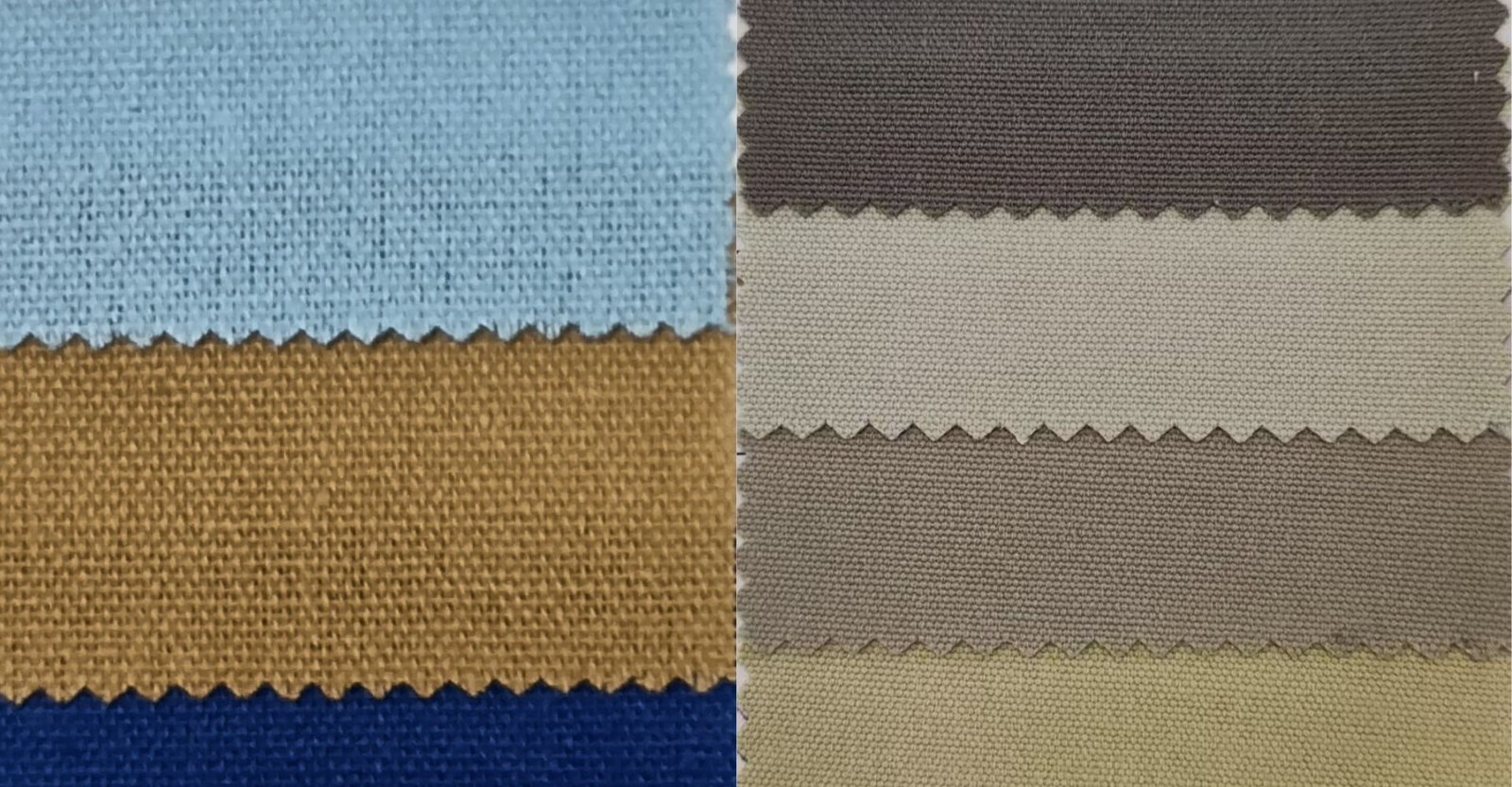
- The Heritage Feel: This construction highlights the Texture of the Weave. It feels like a traditional “Canvas.”
- Durability and Stiffness: Because the yarns are thicker, the fabric has more “body” and stands up better on its own. It presents a “heavy-duty” image that is perfect for outdoor sports, heritage brands, or rugged fan gear.
- The Aesthetic Choice: If your brand identity is built on toughness and “old-school” stadium vibes, this textured path is superior to the refined path.
III. The Domino Effect: How Specs Impact After-Processing
As a Procurement Manager, you aren’t just buying raw fabric; you are buying a canvas for your brand’s artwork. The fabric specification you choose has a massive impact on the secondary manufacturing stages.
1. Color Absorption and Saturation
High-density fabrics (like the 15×23 or 96×48 mentioned above) have more fiber surface area. This allows for deeper dye penetration and more vibrant color saturation. If you choose a low-density “budget” fabric, the colors may appear “muted” or “washed out” because the gaps in the weave don’t hold the pigment as effectively.
2. Dimensional Stability
During the cutting and sewing phase, low-density fabrics are prone to bi-axial distortion. This means the fabric “skews” or twists. If the fabric twists, your logo—no matter how perfectly printed—will appear crooked on the final product. High-density specs ensure that the “Grain Line” of the fabric remains stable through the entire production line.
3. Pilling and Surface Abrasion
Single-ply, low-twist yarns (often found in budget 6oz fabrics) are prone to “pilling”—the formation of small fuzzballs on the surface. By specifying Plied Yarns (like 32s/2), you significantly increase the abrasion resistance of the product, ensuring it looks new even after multiple washes.
IV. The Commercial Reality: Supply Chain Resilience
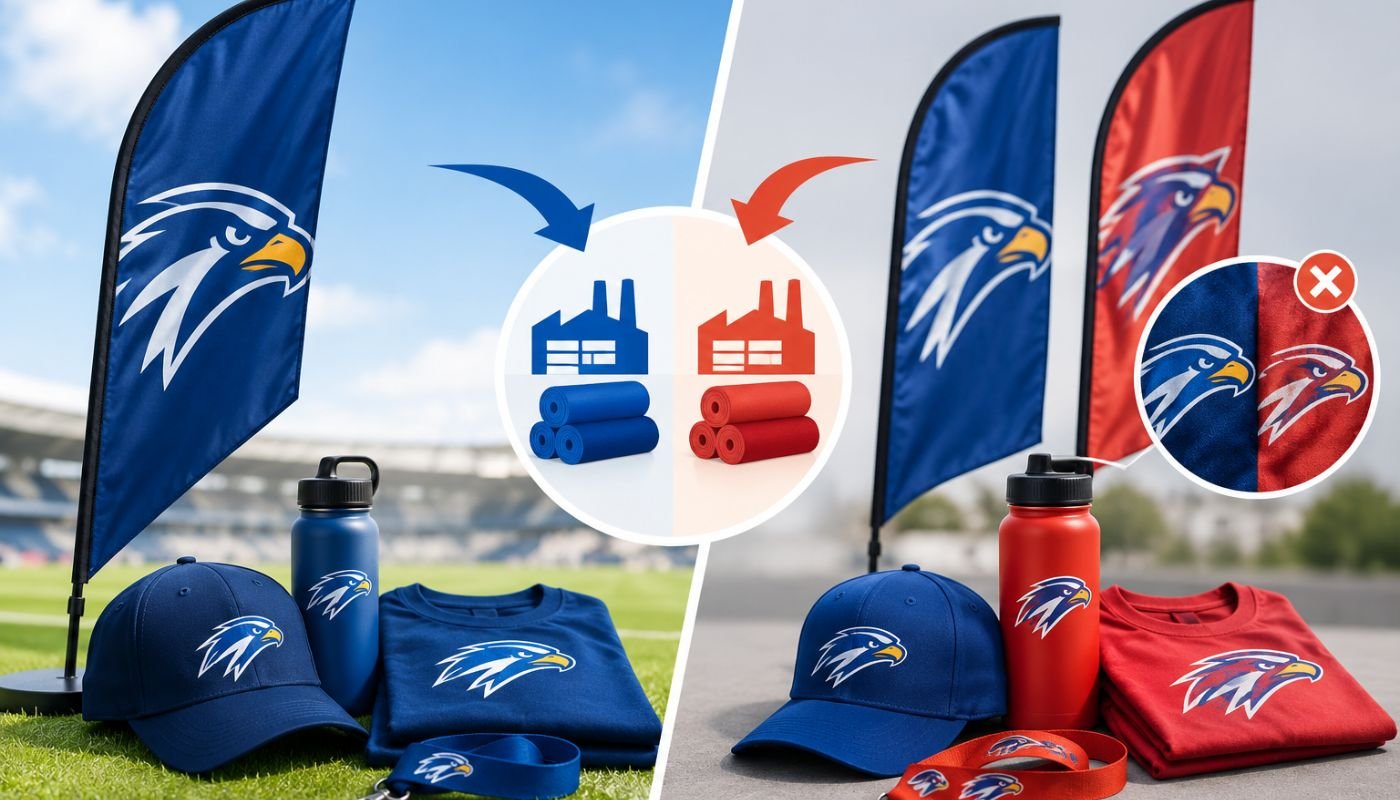
One of the greatest challenges for procurement teams is finding specific colors in non-standard weights. In the world of “6oz” fabrics, you will often find that stock colors are limited to Black and Navy.
Why? Because 6oz is an “In-Between” weight in industrial weaving.
At J&F Promotions, our role is to bridge this gap. If a specific color is unavailable in a standard stock weave, we don’t just “settle.” We look at the Yarn and Density Matrix to find an engineering equivalent. We might move from a 21s/1 single yarn to a 32s/2 plied yarn to achieve the exact weight and color the client requires, without sacrificing the hand-feel.
V. The “Expert RFQ” Decision Matrix
To move from “Buyer” to “Product Architect,” we recommend using the following matrix when evaluating your next textile project:
| Parameter | The “Budget” Choice | The “J&F Professional” Choice | Business Impact |
| Synthetic Density | 210D (15×19) | 210D (15×23) | 30% increase in tear strength; zero coating leaks. |
| Cotton Yarn Ply | Single Ply (e.g., 10s) | Plied Yarn (e.g., 32s/2) | Significantly smoother surface; 2x pilling resistance. |
| Weave Density | Low (visible gaps) | High (tightly packed) | Superior ink holdout; sharpest logo borders. |
| Stabilization | Standard | Pre-shrunk / Heat-set | Eliminates post-wash distortion and “logo-skew.” |
VI. Conclusion: Partnering with Engineers, Not Traders
In the high-volume world of promotional products—where we might ship 140,000 units for an NFL event in a single week—there is no room for “approximate” quality. Every inch of fabric is a calculated decision.
When you work with J&F Promotions, you aren’t just selecting a product from a catalog. You are accessing a deep understanding of Textile Engineering. We believe that if you get the “Invisible Math” right—the yarn counts, the densities, and the ply—the visible result will always be a product that exceeds fan expectations and protects your brand’s prestige.
The next time you prepare an RFQ, don’t just ask for the weight. Ask for the construction. That is where true quality lives.