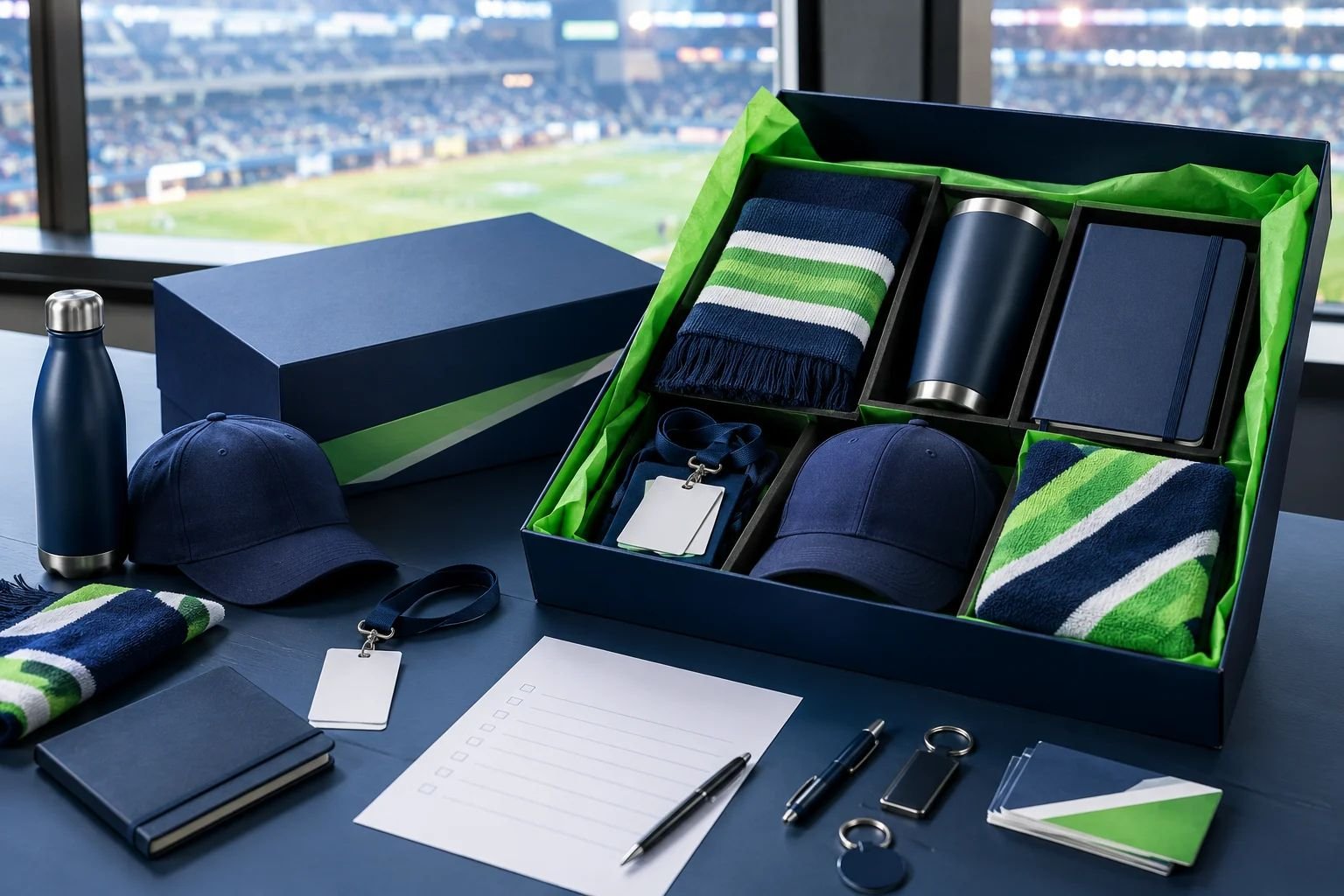
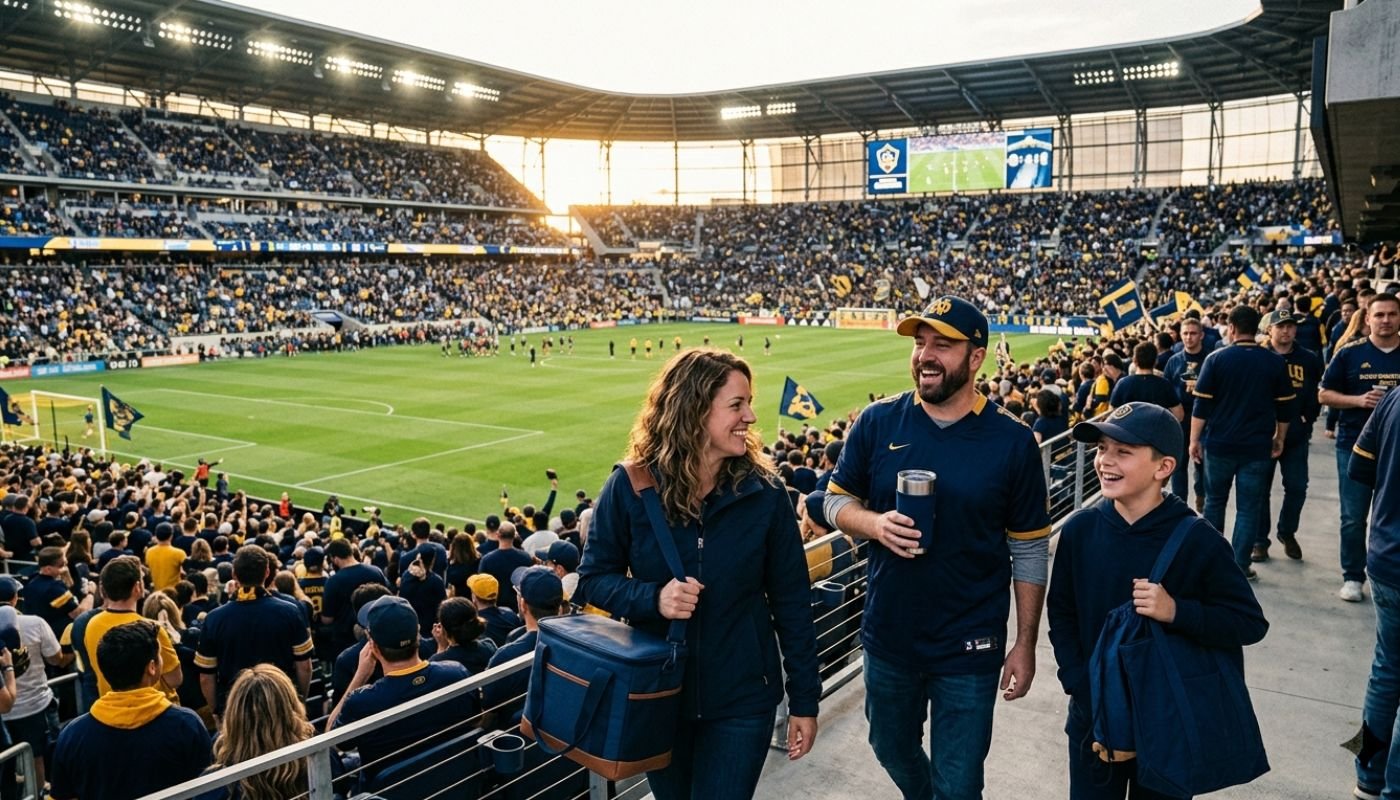
September is when the sports calendar gets loud again: the NFL regular season kicks off this week, MLB teams are pushing toward October, and MLS clubs are lining up their postseason supporter campaigns. For teams, sponsors, and agencies, that also means giveaway season.
But the giveaway itself is changing. The old playbook was volume: order something cheap, hand it to every fan at the gate, and accept that much of it will be left under a seat or thrown out before the second inning. The new playbook is different. Brands are moving from one-time giveaways toward reusable fan merchandise — items fans actually keep, carry, and bring back to the next game.
This shift is part trend, part environmental necessity, and part plain business math. Here is what is driving it, what is already happening in stadiums across North America, and how to choose reusable promotional products that fans will genuinely use.
1. The Waste Problem Hiding in the Giveaway Bin
Most promotional merchandise has a short life. In a widely cited 2019 study of promotional product impressions, only about 21 percent of branded items were kept by recipients — typically for about a year — while roughly 23 percent were thrown away outright.
Sports giveaways face an even harder test, because they arrive in an environment built for entertainment, not for keeping things. Fans are holding food, phones, and children. Anything that is not obviously useful usually ends up in the trash before the event is over.
The stadium food-and-beverage side shows how big the problem can get. Sustainability advocates estimate that an average venue hosting roughly 100 events a year goes through more than half a million single-use cups annually — an estimated six-plus tons of plastic waste. Multiply that across leagues, teams, and concession programs, and the scale becomes clear.
Giveaway items add another layer: printed plastic noise sticks, cardboard signs, foam fingers that never fit in a car, and low-quality gadgets with one day of relevance. Every one of them represents materials, energy, shipping, and money spent for a product designed to be disposable.
The reusable movement in sports started with cups and packaging. Now it is moving to the merchandise itself.
2. Stadiums Already Proved That Reusable Works
The strongest signal that reusable merchandise is not a fad is what venues have already done with reusable cups — the highest-volume branded item in sports.
At Super Bowl LX, held at Levi’s Stadium in February 2026, the game-day beverage program ran on reusable cups backed by AI-assisted sorting and recycling systems. That program grew out of a pilot launched by PepsiCo and the San Francisco 49ers for the 2025-26 NFL season, which diverted more than 32,000 cups from landfill in its first season.
Similar programs are spreading league by league:
- GEHA Field at Arrowhead Stadium in Kansas City rolled out a full-stadium reusable cup system, with more than 42,000 reusable cups replacing single-use options in the program’s early months.
- Oracle Park in San Francisco expanded its “Replay Program” for the 2026 season, serving poured drinks at concession stands in washable cups.
- The Colorado Rockies ran a reusable cup pilot recognized by MLB for innovation, while the San Diego Padres have pushed a large share of home-game waste away from landfill through recycling and composting programs.
- In MLS, the Columbus Crew added a refillable, reusable water bottle to its new C96 season ticket membership — a bottle fans are encouraged to use inside the stadium all season.
The pattern is consistent. Once a venue proves that reusable cups reduce waste without hurting speed of service, the conversation naturally moves to other items: What else can fans use more than once?
3. Fans Changed, Too — Sustainability Is Now Part of Team Pride
The second driver is fan expectation. Sports fans increasingly see themselves as part of a community, and a growing share want the brands and teams they support to reflect their values.
GlobeScan research conducted ahead of the 2026 FIFA World Cup, based on a survey of more than 31,000 people, found that football fans are more likely than the general public to buy from responsible brands and to choose reusable packaging. Fan culture, in other words, is no longer separate from sustainability culture — the two are converging.
For teams and sponsors, that creates an opportunity. A reusable giveaway is not just a product; it is a statement. A custom cooler bag with a recycled-polyester shell says the team thought about the planet. A refillable bottle given to season ticket members says the club wants to see them all season, not once. That emotional message is exactly what sponsors pay to attach themselves to.
Younger fans in particular are more likely to photograph useful, well-designed merchandise, tag the team or sponsor, and carry the item into their daily life. One thoughtful reusable item can generate more social impressions than a bin of single-use trinkets.
4. One Great Item Beats Ten Cheap Ones
There is a business case behind the environmental case, and it is simple: reusable products create more brand exposure per dollar.
A one-time giveaway delivers its impressions in a single window — the few hours fans are in the stadium. After that, the item is discarded, donated, or forgotten in a drawer.
A reusable item keeps working:
- A cooler bag goes to tailgates, picnics, and beach days.
- A tote or drawstring bag is carried through the week, to work, school, and grocery runs.
- A bottle or tumbler is refilled dozens or hundreds of times.
- A rally towel hangs on a wall, rides in a gym bag, or returns to the next playoff game.
- A scarf, beanie, or blanket gets worn every cold season — and every time it does, the team and sponsor logos travel with it.
The perceived value also changes the fan’s behavior. Fans treat a high-quality reusable item as a keepsake or gift, which means they are more likely to keep it, use it, and remember who gave it to them. For sponsors, that turns a one-day promotion into months of impressions.
There is a cost question too. A reusable item almost always costs more per unit than a cheap single-use item. But the relevant metric is not unit price; it is cost per usable impression. One $4 cooler bag used 40 times is cheaper, and more powerful, than four $1 trinkets thrown away after one game each.
5. Reusable Only Helps If Fans Actually Use It
The caveat in this trend is that “reusable” is not automatically “sustainable.” A reusable product only earns its environmental story if it is used enough times to offset the extra material that went into making it.
That is why the best reusable giveaways share the same traits:
- Everyday usefulness. Choose products fans already use in daily life: bags, bottles, towels, blankets, headwear — not novelty items with one purpose.
- Durability. A product that falls apart after three washes becomes waste anyway. Check zippers, seams, print durability, and insulation quality.
- Recycled or responsible materials where possible. rPET fabric, recycled polyester, and responsibly sourced cotton add credibility to the sustainability message.
- Prints that last. Sublimation and quality embroidery outlast cheap transfer prints, keeping the logo clean through months of use and washing.
- Honest messaging. If you promote recycled content, confirm what the material actually is. Fans and procurement teams are increasingly good at spotting greenwashing.
- Minimal packaging. A bulk-packed reusable giveaway can save more waste in packaging than the item itself creates.
One more practical point: avoid overproduction. A well-planned order for the right quantity beats a giant order that ends up in warehouse clearance. Reusable merchandise is an argument for better forecasting, not just better materials.
6. Reusable Fan Merchandise to Plan for the Rest of 2026
The fall season creates natural moments for reusable merchandise, from NFL tailgates to holiday watch parties and winter games.
| Product | How fans reuse it | Best timing |
|---|---|---|
| Custom cooler bags and lunch totes | Tailgates, picnics, beach and park days | NFL and college football season, holiday gift boxes |
| Reusable bottles, tumblers, and koozies | Every game, workout, and commute; refillable at home | Season ticket gifts, watch parties, sponsor activations |
| Tote and drawstring bags | Groceries, gym, school, stadium errands | Multi-item giveaways, family days, sponsor gift packs |
| Rally towels and microfiber towels | Waved at games, then kept for the next one or used at the gym | Playoffs, rivalry games, sponsor nights |
| Scarves, beanies, and blankets | Worn and used through every cold-weather season | Late-season NFL, winter events, holiday campaigns |
| Custom caps | Worn long after the event, with a large embroidery or patch area | Any outdoor game, season ticket gifts, retail-style merch |
For buyers, the planning window still follows the old rules: custom merchandise takes weeks to produce and weeks to ship. If the goal is a reusable hero item for late-season games or holiday watch parties, September and October are the months to lock in artwork, quantities, and delivery dates — especially for sea-freight orders.
7. What This Means for Your Next Giveaway Order
The giveaway of the future is smaller in variety and bigger in intent. Instead of asking “What can we hand out cheaply at the gate?”, successful brands are asking a harder question: “What will fans still be using next month?”
That question changes almost every decision downstream:
- Product selection: everyday-use items over event-only novelties
- Budget: fewer units at a higher value per unit
- Design: team identity and sponsor logos that still look good after 50 washes
- Materials: recycled and durable fabrics that back up the story
- Messaging: the campaign should tell fans why the item is reusable and how to use it
- Logistics: packaging, carton size, and weight planned for real distribution
The brands making this shift are not abandoning giveaways. They are upgrading them — from disposables that fans throw away to merchandise that fans keep, wear, and bring back.
At J&F, we manufacture custom reusable fan merchandise for teams, sponsors, agencies, and event organizers: cooler bags, tote and drawstring bags, bottles and drinkware, towels, scarves, beanies, blankets, caps, and rally gear — produced with the materials and print quality that survive real use.
If you are planning a reusable giveaway or fan merchandise program for the rest of this season, send us your target arrival date, quantity, artwork, and delivery address. We will help you choose the item fans will actually keep — and deliver it in time for the game.